Comparison
One scene, modeled and imaged
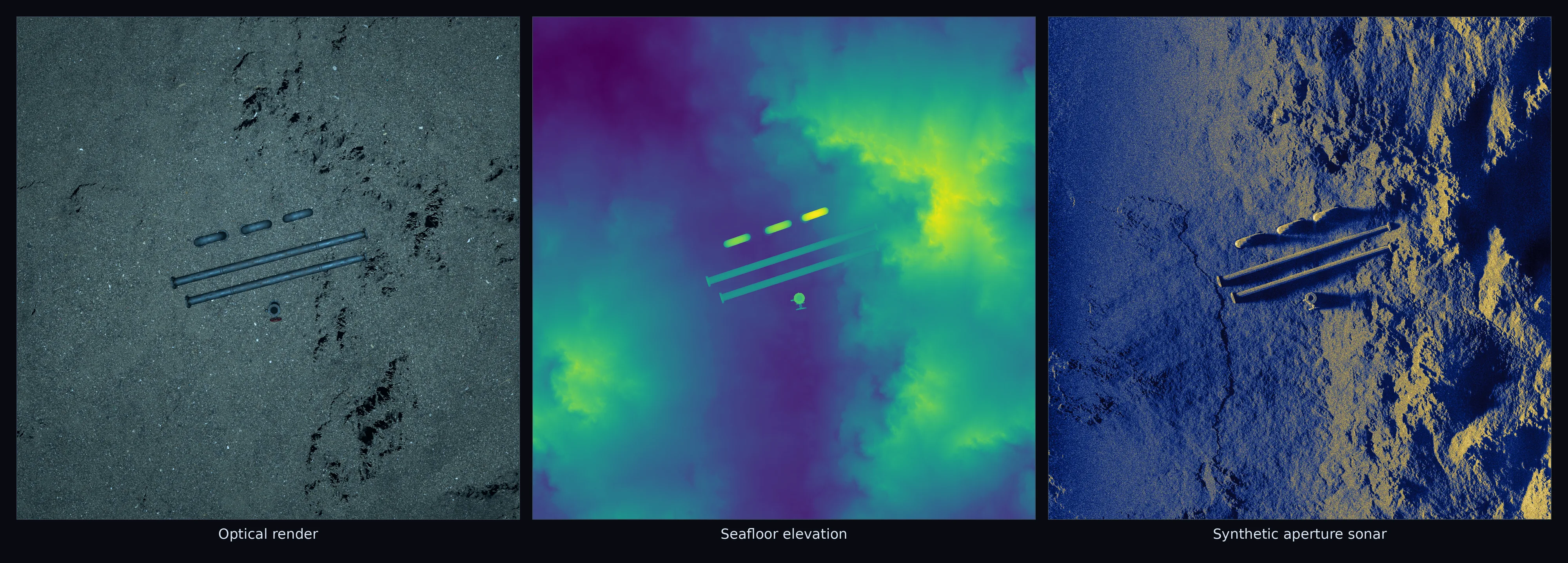
Isabelle Rathbun built this scene. Her work studies multimodal underwater perception: pairing an optical camera with synthetic aperture sonar so that a perception system can continue to operate when the optical channel is degraded or lost. Testing that idea requires the same scene observed by both sensors with the geometry held fixed, which is what this import and imaging pipeline provides. Her profile is at linkedin.com/in/isabelle-rathbun-b42225247.
What carries from the model into the sonar image is the geometry, not the optical appearance. Acoustic scattering comes from surface shape and bottom type, so the colors and textures in the Blender file have no acoustic meaning. Because the simulator knows where every surface is, the modeled and acoustic views share an exact geometry, and the ground-truth labels are produced with the image rather than annotated afterward.
The scene and the research behind it are Isabelle Rathbun's work. See more and connect with her on LinkedIn: linkedin.com/in/isabelle-rathbun-b42225247.